
Riding the Triple IPA Wave
Over the past year, I have found myself diving deeper into the world of Northern California breweries. I have tasted widely and asked questions, trying to understand why certain styles capture the imagination of both brewers and drinkers. Among all the trends, one stood out more than any other: the rise of the Triple IPA.
At a time when crisp lagers and hop-forward pilsners are gaining momentum, it surprised me to see such a high-octane, intensely hopped style thriving. That curiosity led me on a journey through taprooms, brew days, and conversations with the people behind these massive beers.
What I discovered is that Triple IPAs are far more than just bigger IPAs. They are displays of creativity, technique, and regional identity.
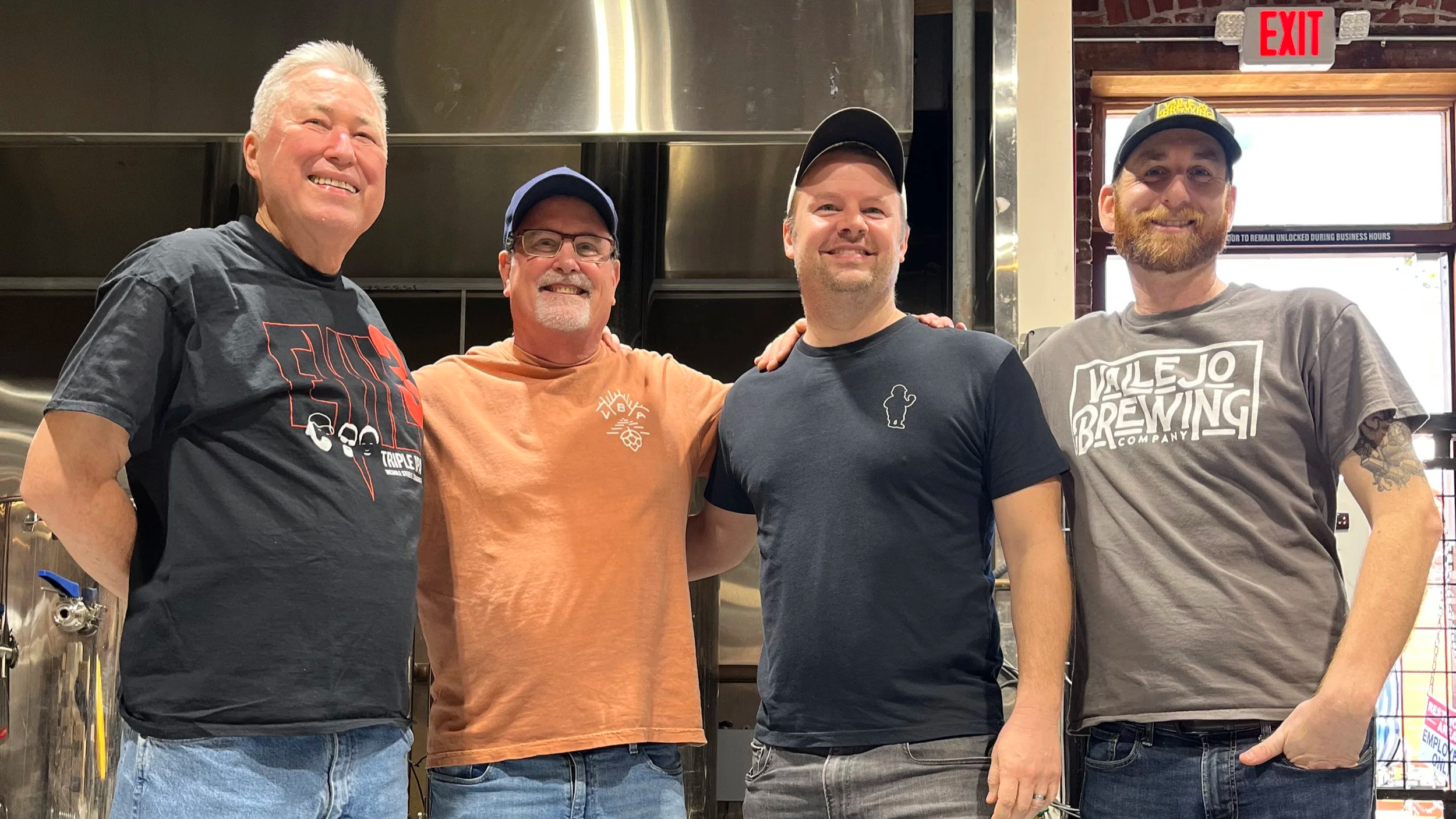
Jamil Zainasheff, Mitch Steele, Lee McDole and Andrew Conlon pose on brew day at Vallejo Brewing Company January 7, 2026.
While Triple IPAs feel like a modern invention, their lineage stretches back centuries. The original India Pale Ales of 18th-century England were brewed stronger and hoppier to survive long voyages.
The modern Double IPA appeared in the 1990s, thanks in large part to Vinnie Cilurzo at Blind Pig Brewing, who pushed hop intensity, making it stand apart from maltier beers which dominated at the time. By the 2000s and 2010s, brewers were pushing those boundaries even further, experimenting with concentrated wort production, massive dry hopping, and yeast strains capable of fermenting heavy sugar loads. Sometimes referred to Imperial IPAs, Triple IPAs, often reaching 10-12% ABV, became seasonal and celebratory releases that displayed brewing skill and creativity.
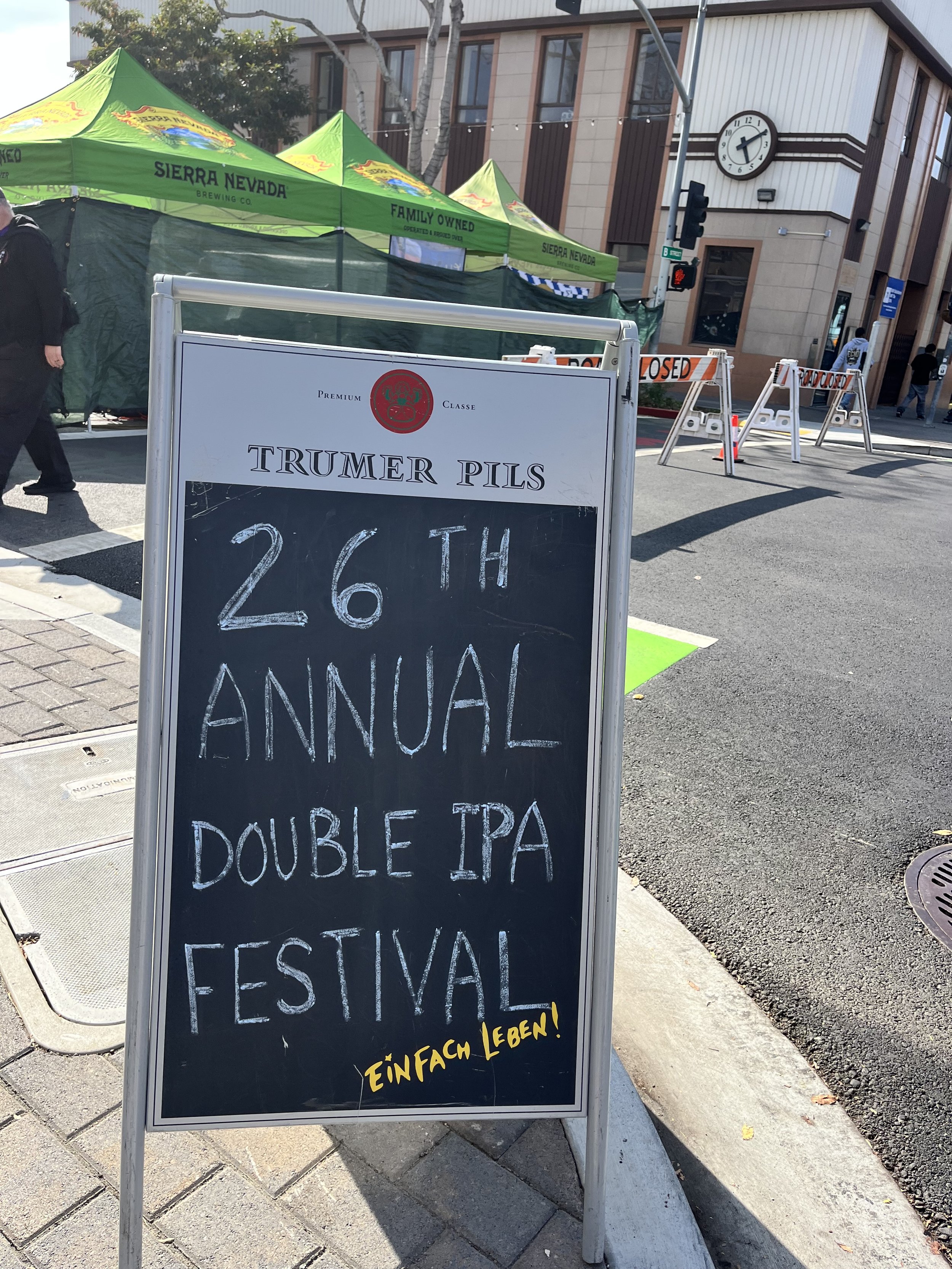
Sign outside the Double IPA Fest Saturday, February 7, 2026, at The Bistro in downtown Hayward, California.
Every year, one of Northern California’s best-known breweries releases an annual Triple IPA; a beer that draws crowds, sells out quickly, and inspires other breweries to join the fun. Looking around, it seemed Triple IPAs were everywhere. Some were hazy and sweet, others lean and sharply bitter, while a few struck that elusive balance between drinkability and intensity.
I tasted as many as I could, and eventually began to understand what I personally enjoyed about the style. But tasting was not enough. I wanted to hear directly from the brewers who make them.
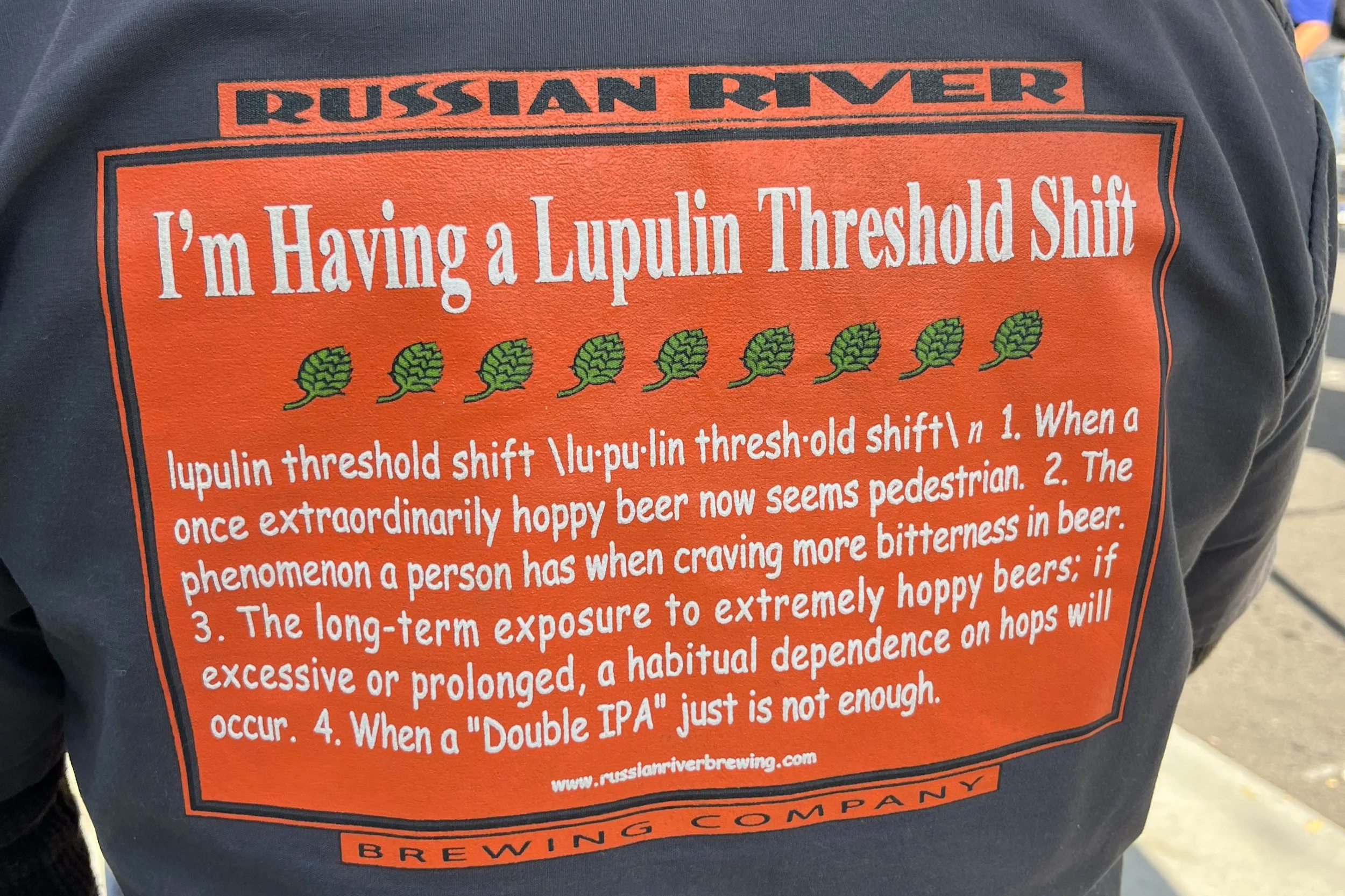
T-shirt of a reveler at the Double IPA Fest in Hayward, California on Saturday, February 7, 2026.
Brewing Big: Vallejo Brewing Company’s Evil Trinity
“While I cannot drink a Triple every day, I love to brew it once a year because it reminds me that a big beer can be balanced but drinkable,” Said Andrew Conlon of Vallejo Brewing Company. Conlon teamed up with Jamil Zainasheff, Mitch Steele, and Lee McDole to brew Evil Trinity, a tribute to home brewing icon Mike “Tasty” McDole and the Triple IPA they first crafted at Heretic Brewing Company in 2014.
Its revival at Vallejo Brewing Company, led by Conlon, felt like a continuation of brewing history. Evil Trinity quickly became one of my favorite expressions of the style. It was bright and aromatic, with a playful hop profile that danced with the rich caramel malts. Despite its strength, it was surprisingly drinkable. This is a beer meant for slow savoring rather than casual sipping.
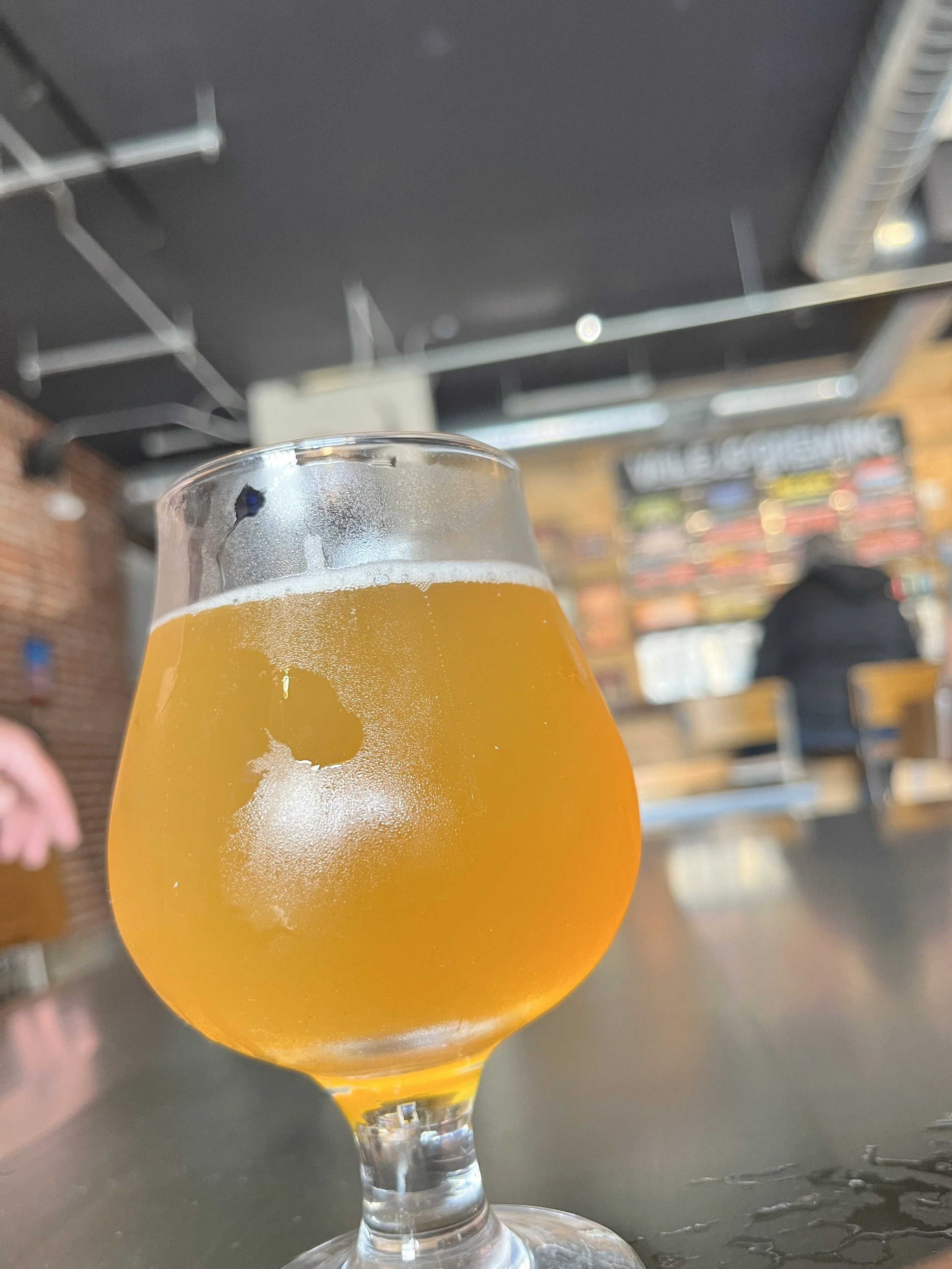
A pour of Evil Trinity on Release Day at Vallejo Brewing Company on Saturday, February 28, 2026.
Experimentation on a Smaller System: Kegstand Brewing
In Novato, The Keg Stand Brewing recently celebrated its first year in business. With a smaller brewhouse, the brewery has the freedom to experiment, releasing one-off beers to gauge customer response. Its flagship IPA, Getting Groceries (6.6% ABV, 62 IBU), is a bold West Coast IPA that became the foundation for its Triple IPA, Tom’s Triple Tastic (TTT).
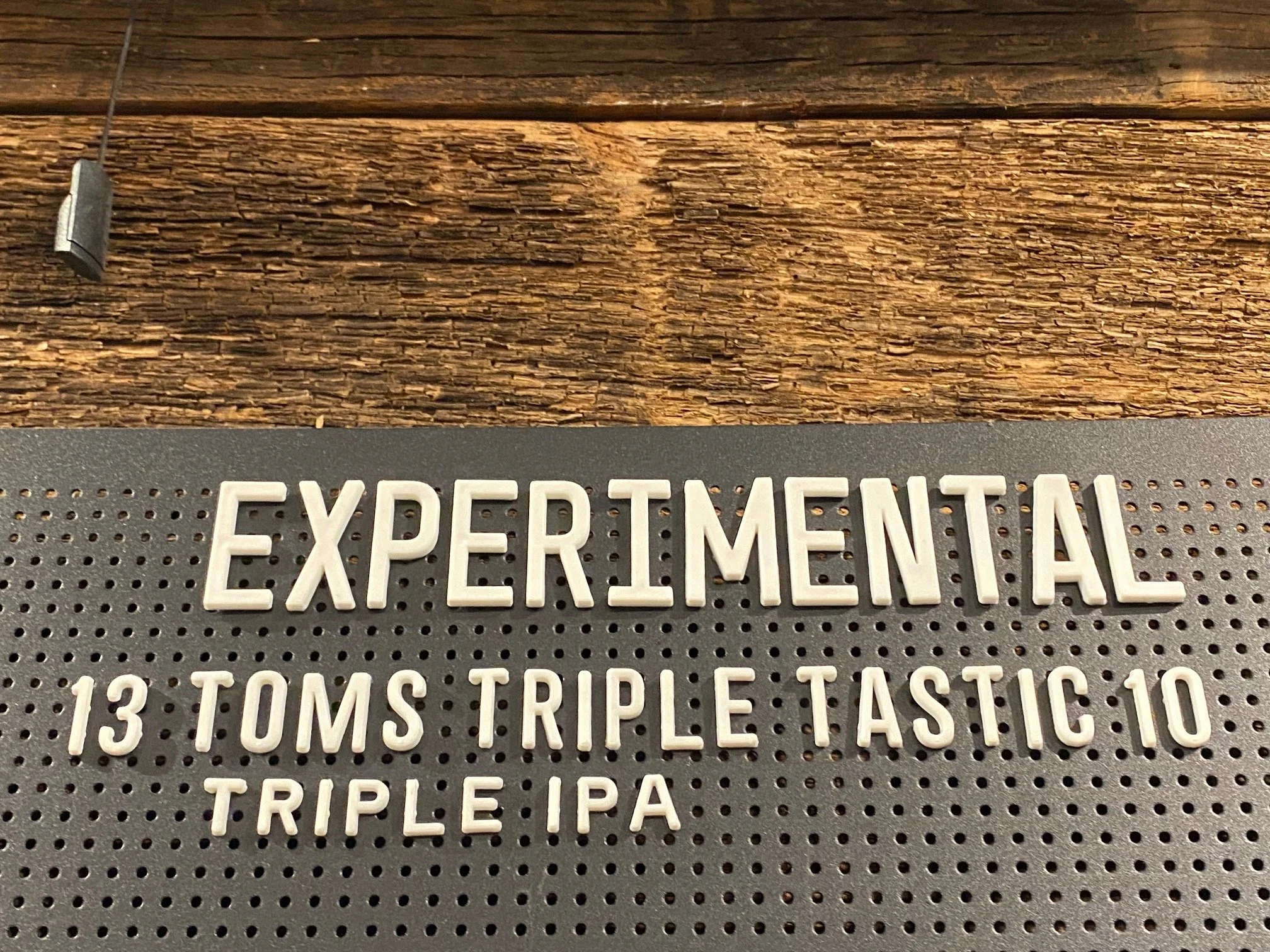
A Triple IPA on the Beer Board at The Keg Stand Brewing in Novato, California.
“Our flagship IPA is brewed with Mosaic, Citra, and Columbus hops, and we thought the profile of an extremely popular beer would work for a stronger version,"said Tom Wolf, beer tender at The Keg Stand. “I am always telling (the owner) Jake and our brewer to make stronger IPAs and ales. We brewed a small batch not knowing how it would turn out, and we hit it out of the park.”
They were not exaggerating. The beer was excellent, and it did not last long on tap.
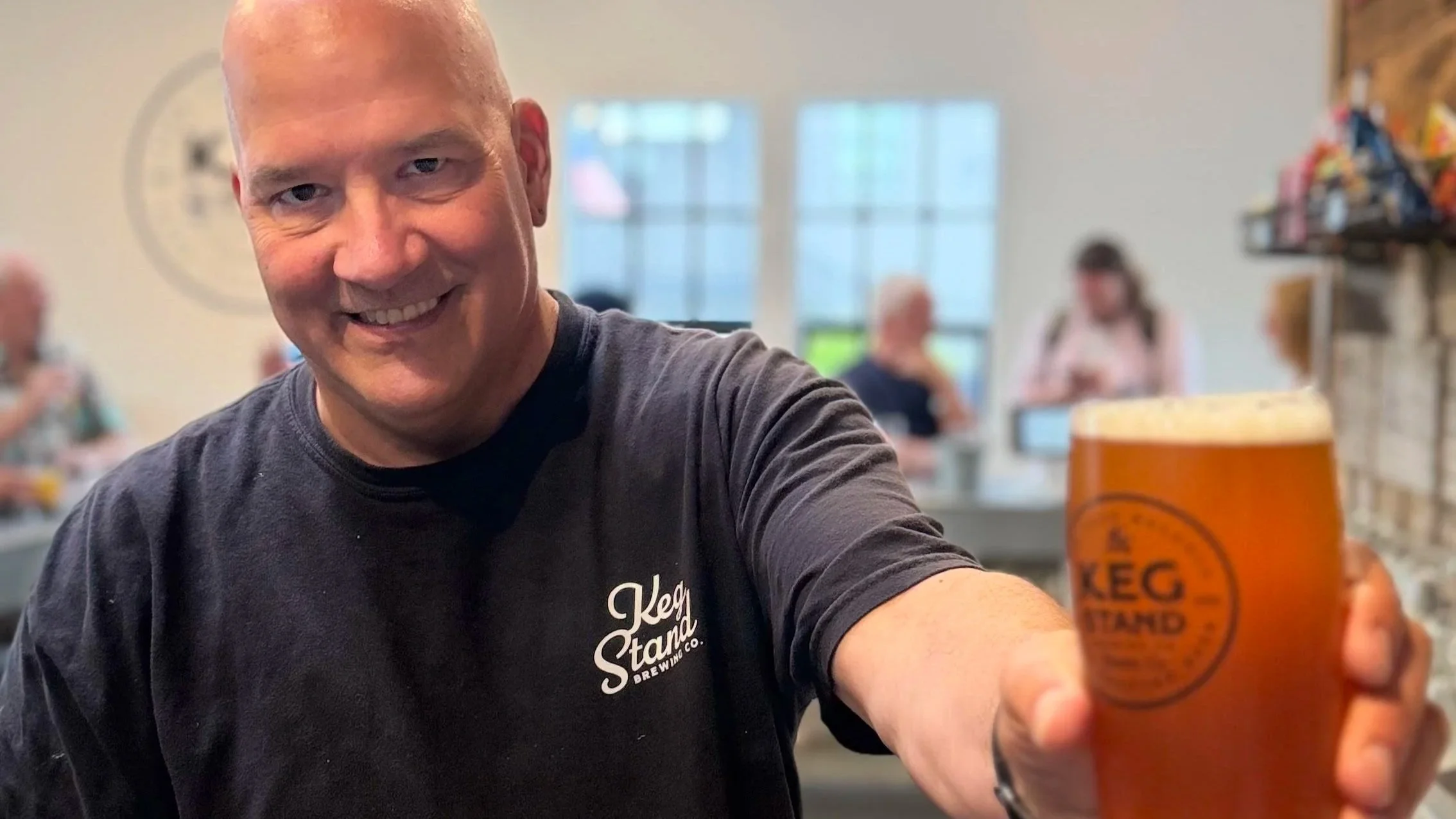
Tom Wolf, Beer Tender at The Keg Stand Brewing Co. with a Pint of Tom’s Triple Tastic (TTT) IPA.
Sonoma County’s Triple IPA Wave
Russian River Brewing may be the region’s most famous hop-centric brewery, but the Triple IPA movement in Sonoma County is much broader. HenHouse Brewing Company has released Big Chicken since 2014, and this year’s version arrived as a hazy Triple IPA.
Other regional breweries have also embraced the style, each offering its own interpretation; From citrus-bright and aromatic to resinous and bitter to soft and tropical. Dire Wolf from Wolf House was released this spring, and the (11.4%, 100 IBU) Godwood Giant from Fogbelt, was first released in 2021. Triple IPAs walk a tightrope: huge hop intensity balanced against alcohol levels that often exceed 10%. When executed well, they become displays of both technical skill and hop artistry.
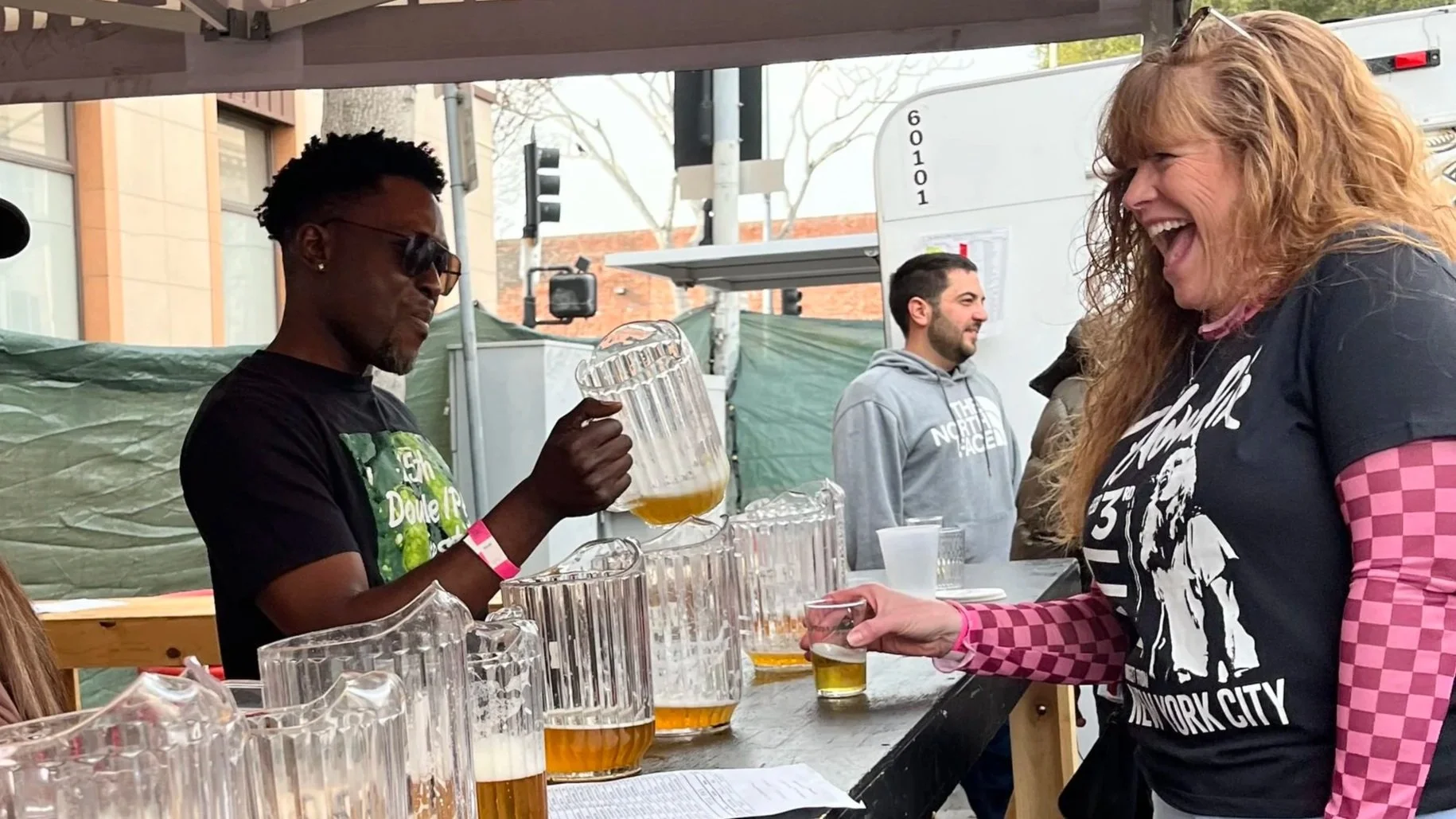
A participant laughs as she is poured a beer at The Double IPA Fest in Hayward, California Saturday, February 7, 2026.
The Bistro Double IPA Fest
The Bistro’s Double IPA Fest is a gathering for people who love IPAs and want to explore their stronger, more intense cousins. Held outside The Bistro in Hayward, the event kicks off SF Beer Week, which took place in February this year. Inside, judges gather in The Bistro’s basement around a long table reminiscent of the Last Supper. Once judging wraps up, they join the festival and celebrate alongside everyone else. Tasting the beers side by side makes it easy to compare the brewers’ different approaches. Among the many beers we tried, we picked up notes ranging from hazy and floral to clean, bitter, dank, and citrusy.
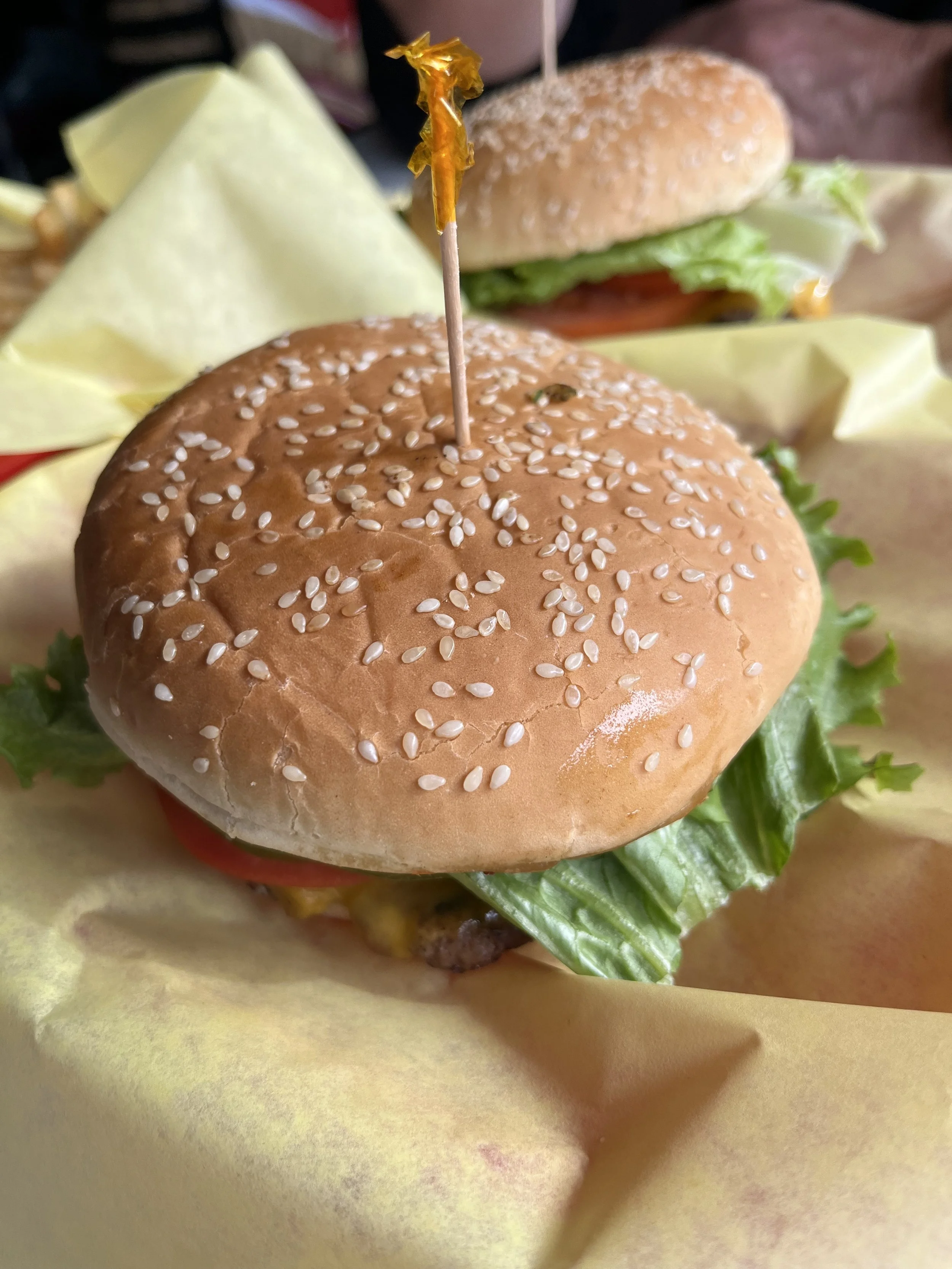
With beers this strong, pacing and hydration are important. Thankfully, there was plenty of good food nearby, including an onsite vendor, which helped my partner and I keep something in our stomachs. We also made frequent trips to the fresh-water station; not only to stay hydrated, but to rinse our glasses and reset our palates between beers.
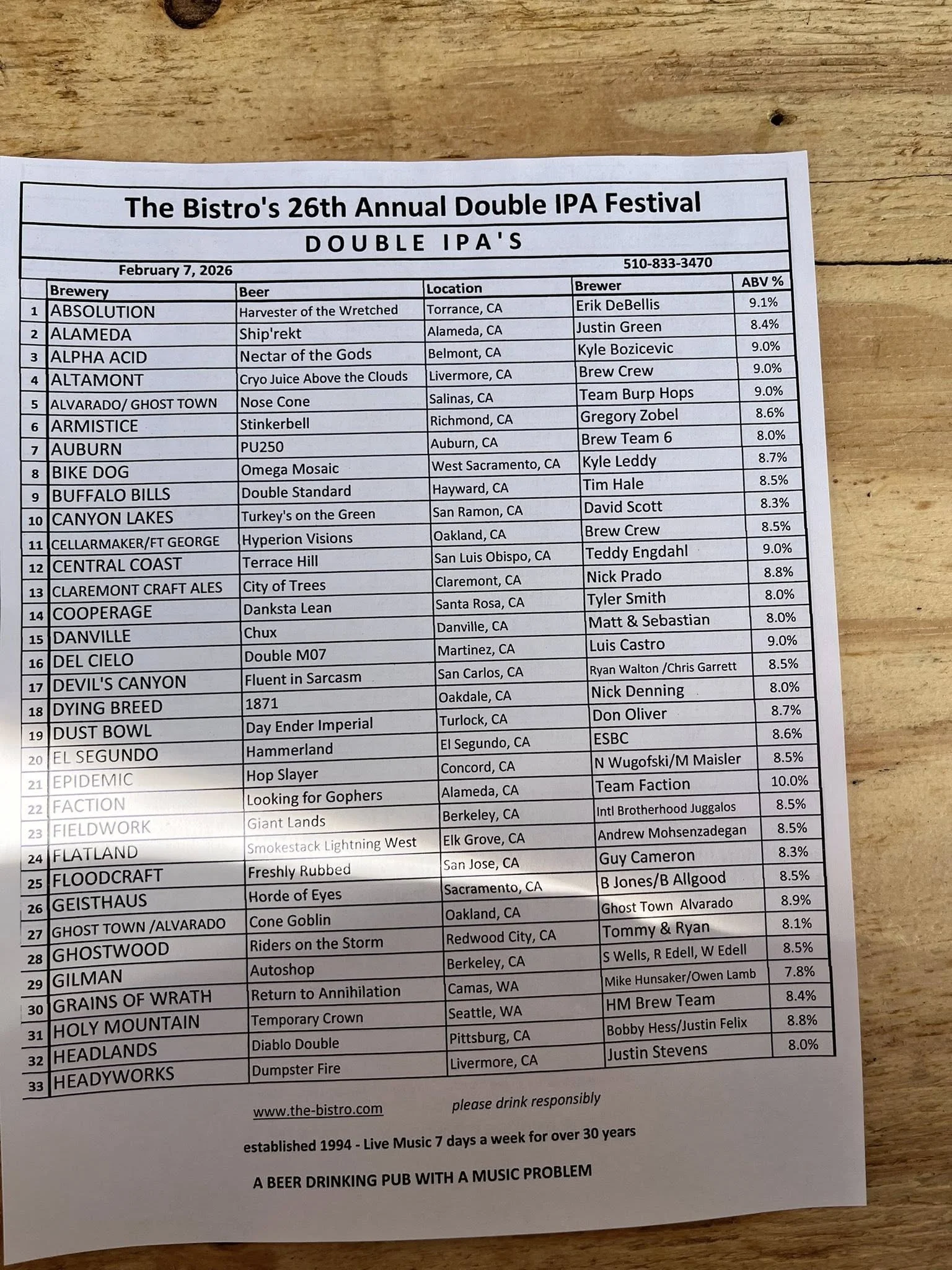
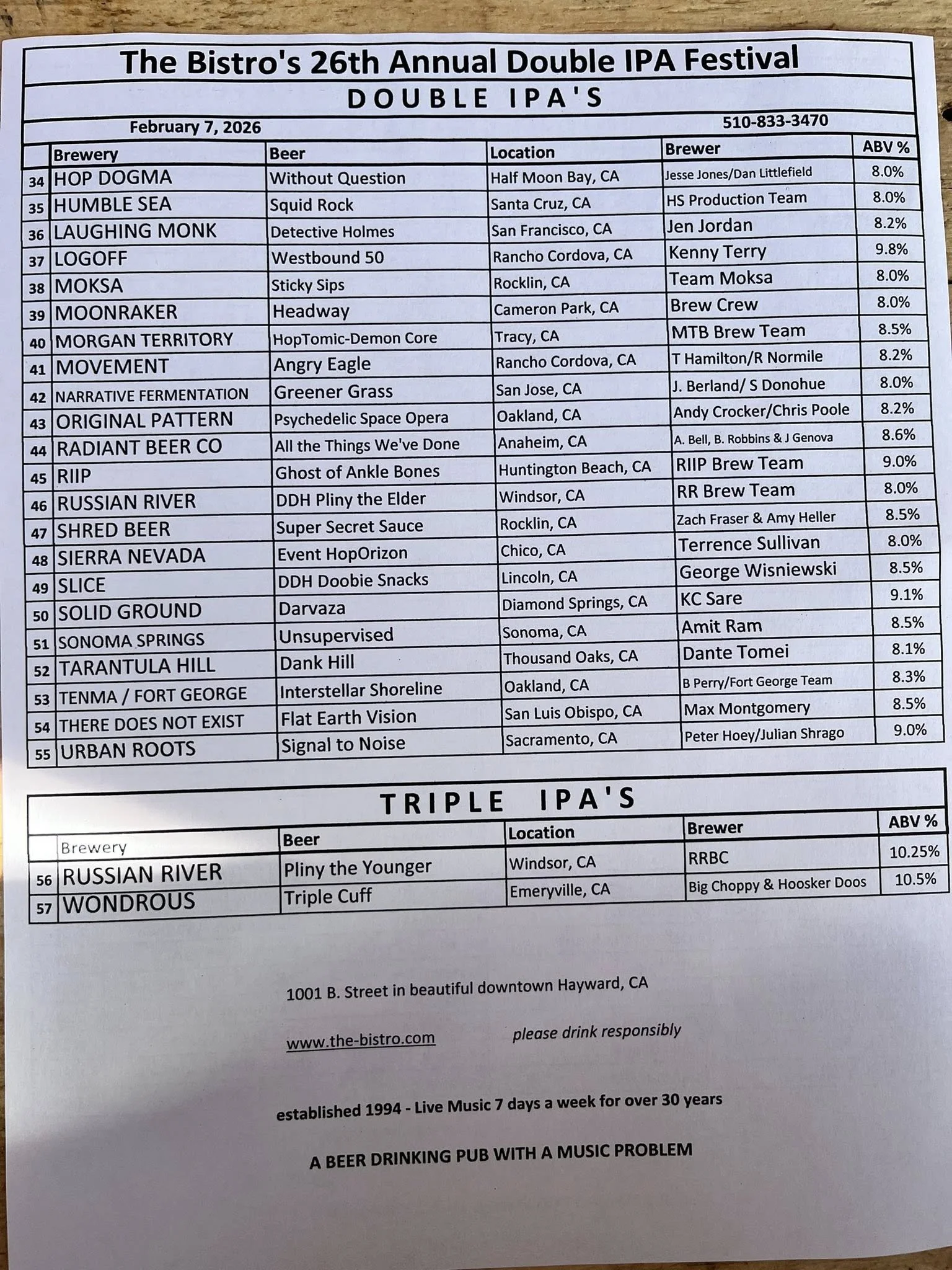
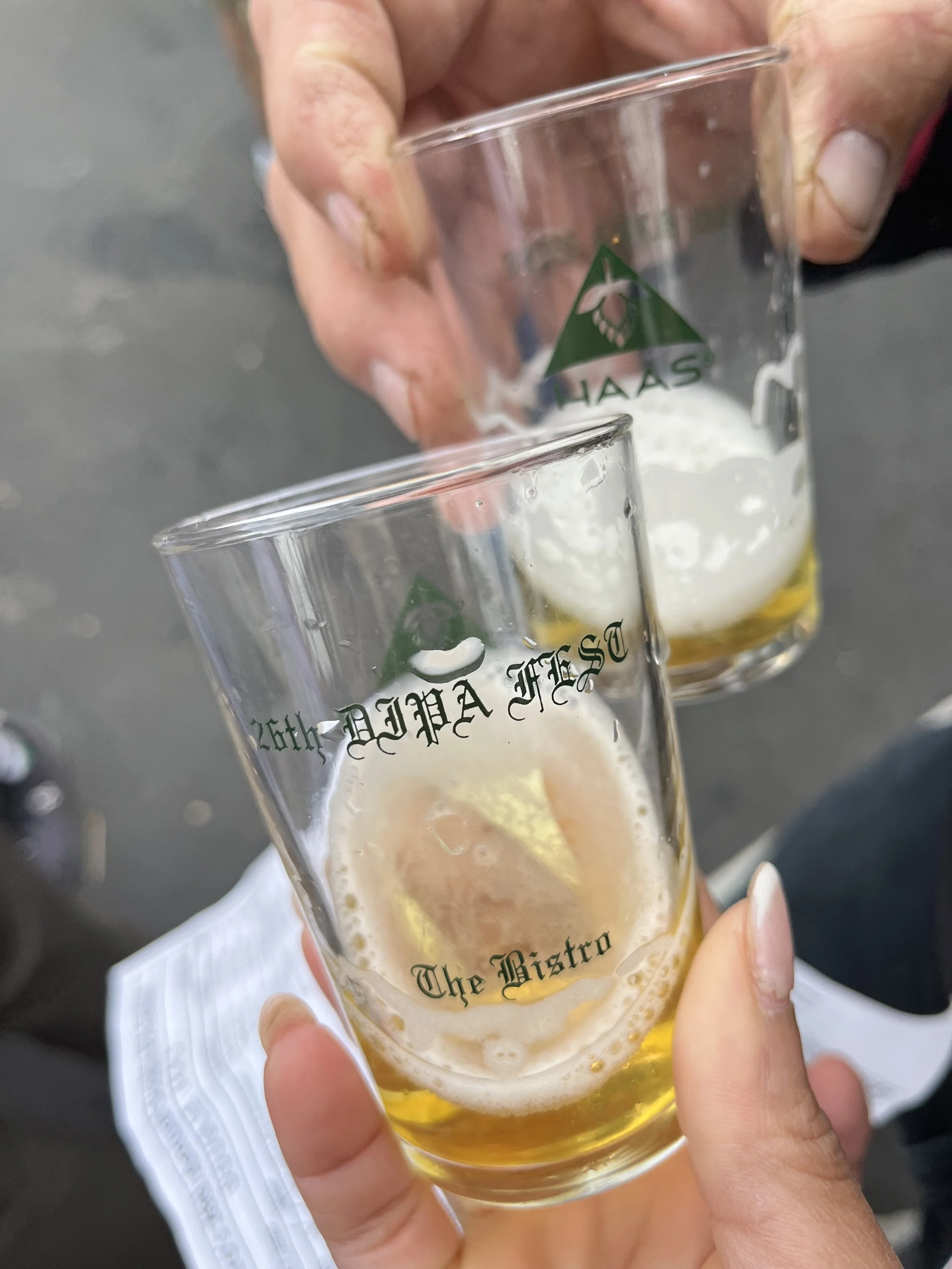
I made a point of looking at each beer and giving it a good sniff before taking a sip. Resinous, dark, piney, lemony; the aromas and flavors created a sensory party for hop lovers. There were also a couple Triples on the list that I made sure to try. I really enjoyed the variety and the chance to experience so many different interpretations of the Double IPA, while also discovering beers from breweries throughout the region.
The future of big beer is not just unfolding, it is erupting. California’s hop culture keeps shapeshifting, pulling hazies, West Coast legends, experimental hybrids, and towering Triple IPAs into the same restless orbit.
Every new release feels like a dare, a reminder that when brewers stretch the limits of hops, alcohol, and balance. Breweries are not simply making another IPA, they are staging an event. A moment. A celebration of how far Craft Beer can go when imagination refuses to stay small.
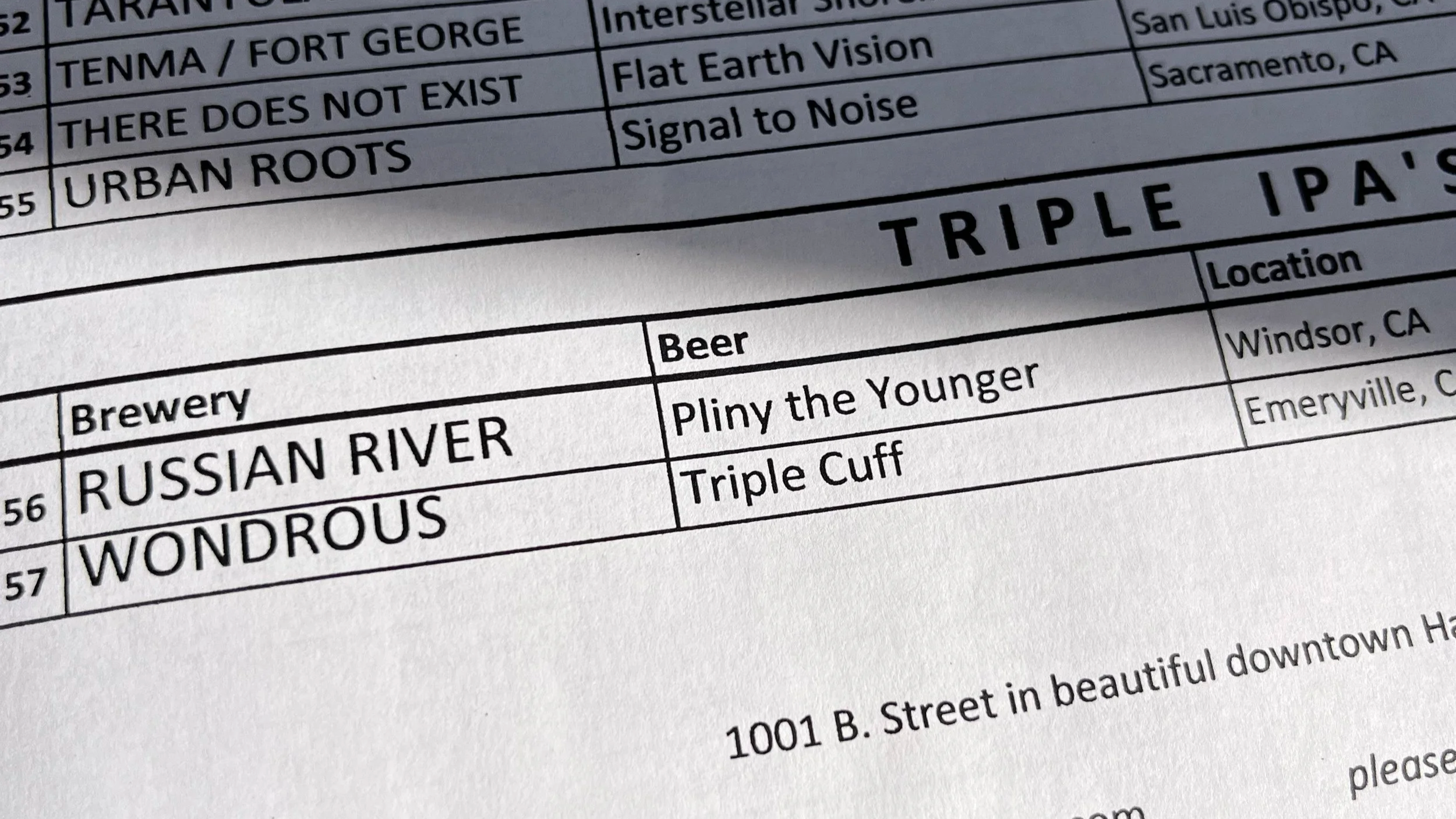
Triple IPAs at The Bistro’s 26th Annual Double IPA Fest in Hayward, California on Saturday, February 7, 2026.